Making Rare Disease Education Impactful for 13M+ Physician Members

While individually rare, rare diseases collectively affect 5%-6% of the population, or 350 to 400 million people worldwide. Yet, people living with a rare disease often experience long delays before a correct diagnosis, poor support from healthcare systems, and steep financial losses. The global cost of the long diagnostic odyssey–including unnecessary healthcare use and lost productivity–is staggering. Rare disease awareness amongst clinicians is crucial in reducing the diagnostic delay and enabling earlier access to management.

At Medscape, we are committed to shortening diagnostic journey and enabling the best possible care for people living with a rare disease. We do this through a vast range of rare disease education and resources, available exclusively to our membership of over 13 million healthcare practitioners. 

The Impact of Rare Disease Education

Computer icon

430
Activities

Picture3

3M
Learners

Picture2

700K
Test Takers

In 2021 Medscape Education launched the Rare Diseases Learning Center, "Pathways in Rare Disease" This resource offers education and tools to empower clinicians in diagnosing and managing rare diseases. Created through global collaborations with leading rare disease organizations, professional societies, and patient advocacy groups, the center provides a rich learning environment.


Disease awareness

Disease Awareness

Next-generation impact on clinician knowledge, competence, and confidence in diagnosing and managing rare diseases

precision targeting

Precision Targeting Specialists

Precision targeting via our
proprietary Precision User Learning & Segmentation Engine (PULSE) to identify the right clinicians

Engaging audience

Engaging a Broad Audience 

Medscape reaches >13 million healthcare providers including >6.5 physicians globally enabling high volumes of learners

Does Rare Disease Education Work?

Infographics_LA_Edits-09

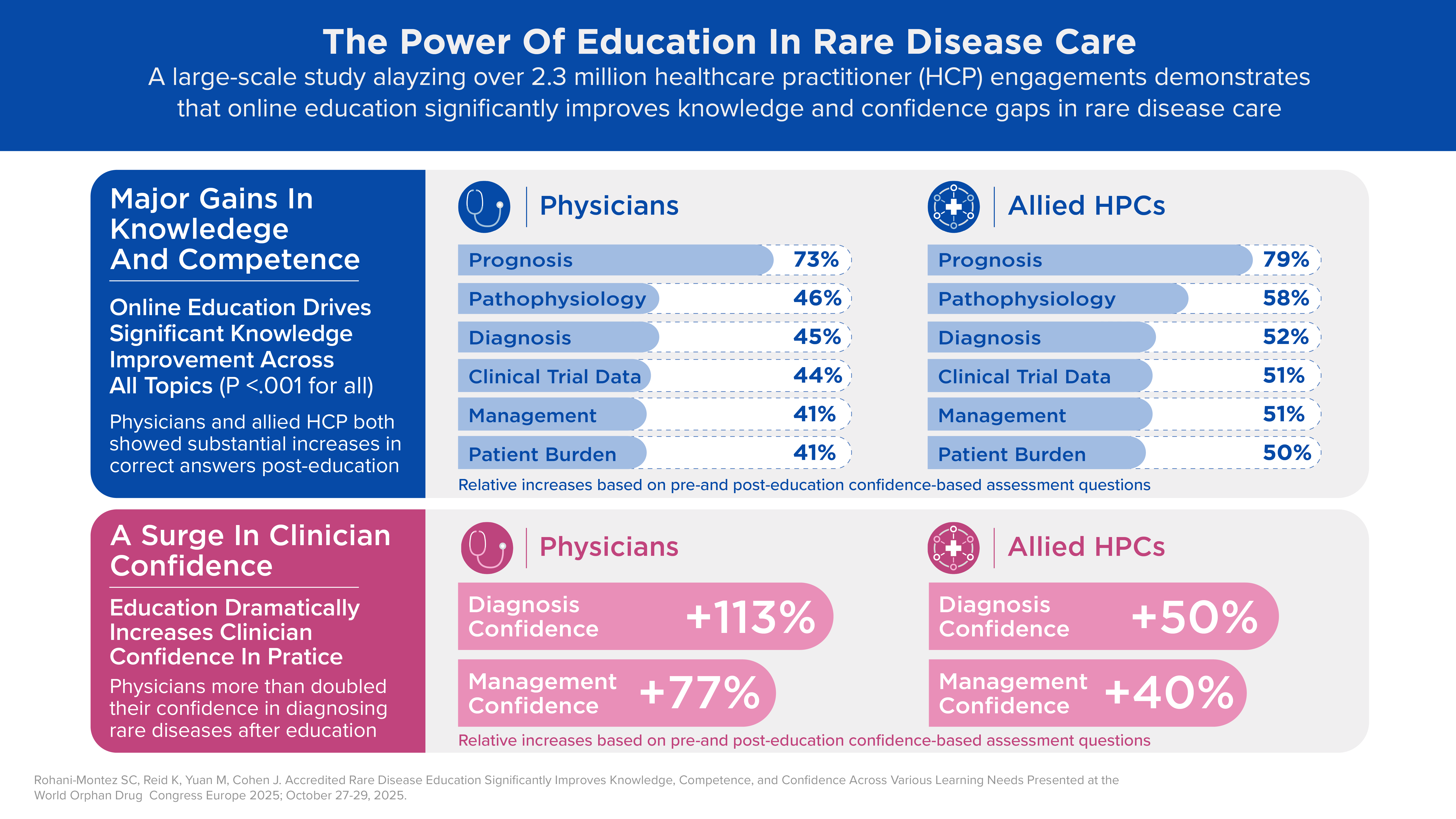
Accredited Rare Disease Education Significantly Improves Knowledge, Competence, and Confidence Across Various Learning Needs
View Poster Here

Education has the Power to Reduce the Rare Disease Diagnostic Delay

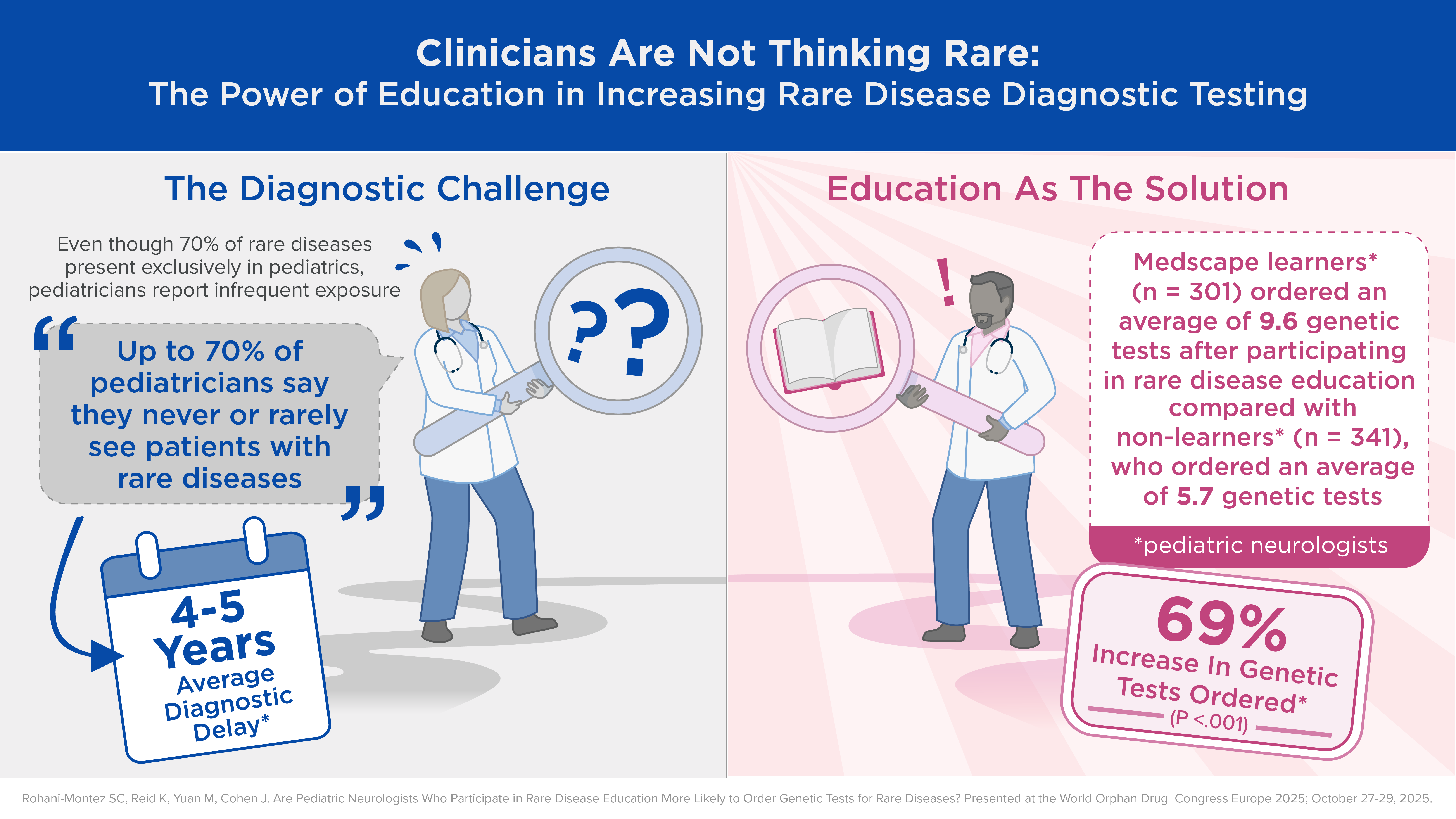
We make the assumption that rare disease education has an impact in real world practice, leading to clinicians better recognizing red flags, ordering appropriate diagnostic tests and making a diagnosis. But where's the proof? That's what we sought to evaluate in these studies: are physicians who participate in accredited education (versus those who don't) more likely to order diagnostic tests? And are they more likely to code for rare disease diagnoses?

Infographics_LA_Edits-07

Are Pediatric Neurologists Who Participate in Rare Disease Education More Likely to Order Genetic Tests for Rare Diseases? 
View Poster Here
Infographics_LA_Edits-08

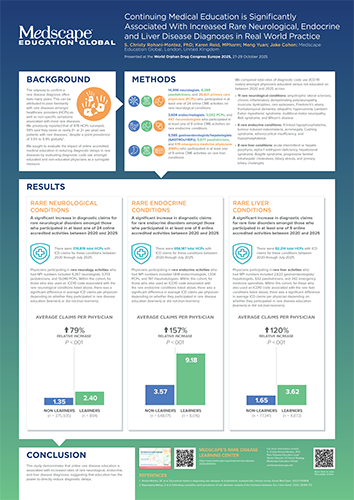
Continuing Medical Education is Significantly Associated With Increased Rare Neurological, Endocrine and Liver Disease Diagnoses in Real World Practice.

View Poster Here
Alexandra Heumber Perry Graphic

Rare Diseases International (RDI) is leading the Global Action Plan on Rare Disease, bringing together stakeholders from around the globe to collaborate and activate this ambitious plan. RDI CEO, Alexandra Huember Perry gives us an update on where we are today.

Lucy and Megan

Christy Rohani-Montez, Medscape’s Rare Disease Education Lead recently spoke with Dr Lucy McKay, CEO, and Megan Pullein, Strategic Operations Officer from the UK-based charity Medics for Rare Disease (MfRD). We discussed their involvement in the recently formed RDI-Lancet Commission for Rare Diseases, a global initiative aimed at developing evidence-based recommendations to improve the lives of the 400 million people living with rare diseases worldwide.

undefined-Nov-13-2025-12-12-52-5222-PM
Nurses play a vital and multifaceted role in rare disease care, providing consistent patient support, education, and care coordination, and ongoing education is essential to empower them to meet the evolving needs.
From genetic puzzles to precision therapeutics soumya image

How was a new rare disease discovered through Singapore’s Undiagnosed Disease Program? And how will technology allow us to change how we discover rare diseases in the future?

Gareth & Christy Article Image

Discover how AI-powered tools are transforming rare disease diagnosis, patient care, and clinical decision-making.

Medscape Rare Edition: Expert Insights

In the Medscape’s Rare Edition, you’ll find the latest updates on our rare disease projects, partnerships, insights, and innovations that are shaping the future of rare disease education. This page will be regularly updated with all our newsletters, so you can stay informed and engaged.

Together, we are stronger.

SUBSCRIBE

Sign up to the mailing list today to
recieve deep expertise straight
to your inbox. 

REGISTER NOW

Content Hub

Picture14

ARTICLE

Educational needs in diagnosing rare diseases: A multinational, multispecialty clinician survey

View
Picture15

ARTICLE

Shining a light on rare cancers: the role of continuing medical education

View
Picture13

ARTICLE

How women are revolutionising rare disease

View
M4rd & Medscape_Rare Diseases Q1 2022 eg-1

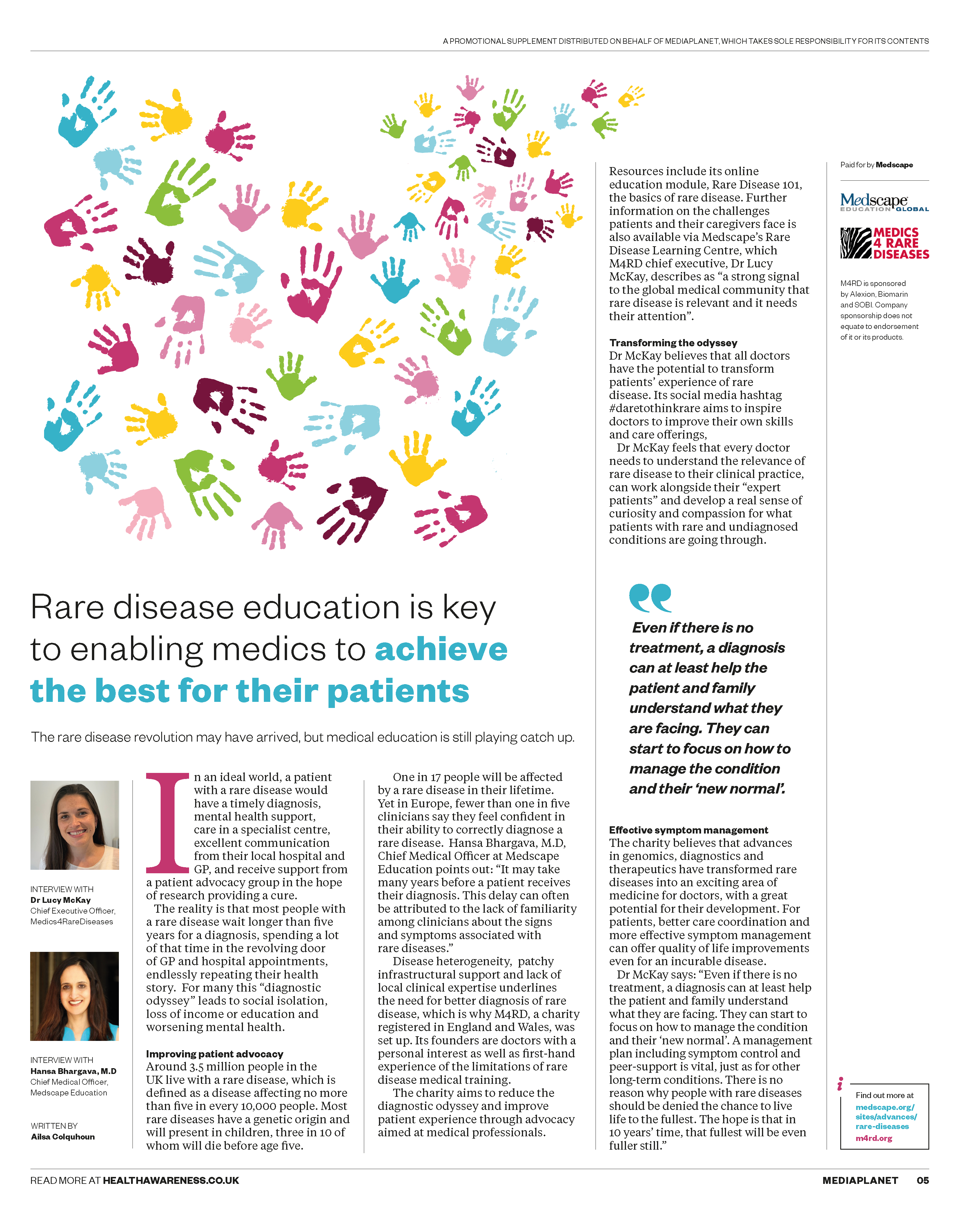
ARTICLE

Rare disease education is key to enabling medics to achieve the best for their patients

View
Picture12

ARTICLE

Rare diseases: making a difference through education

View
500x500_02_500 x 500

PODCAST

Pioneering Paths: Women Leadership in Rare Disease

Listen
Partnering with Leading Rare Disease Organizations

Unlock data-driven insights to inform your rare disease strategy

About Medscape Education

Medscape Education is the leading online platform for continuing medical education (CME) and continuing education (CE), trusted by millions of healthcare professionals worldwide. With more than 30 speciality-specific learning destinations, it offers thousands of free, accredited courses for physicians, nurses, pharmacists, and other healthcare professionals. Medscape Education delivers high-impact, evidence-based education designed to support clinical decision-making, improve patient outcomes, and keep healthcare professionals current in a rapidly evolving medical landscape.